Sites GLAVUPDK
72, Bolshaya Ordynka str.

Bolshaya Ordynka Street is located in the very center of Moscow and connects the Maly Moskvoretsky Bridge with Serpukhovskaya Square. The street got its name due to the road to the Golden Horde located here in the 14th and 15th centuries, along which the Horde – khan’s ambassadors – lived. Since the 18th century, rich merchants and the nobility chose Ordynka as their place of residence. In particular, Count Grigory Orlov – one of the favorites of Empress Catherine II – had his vast possessions here.
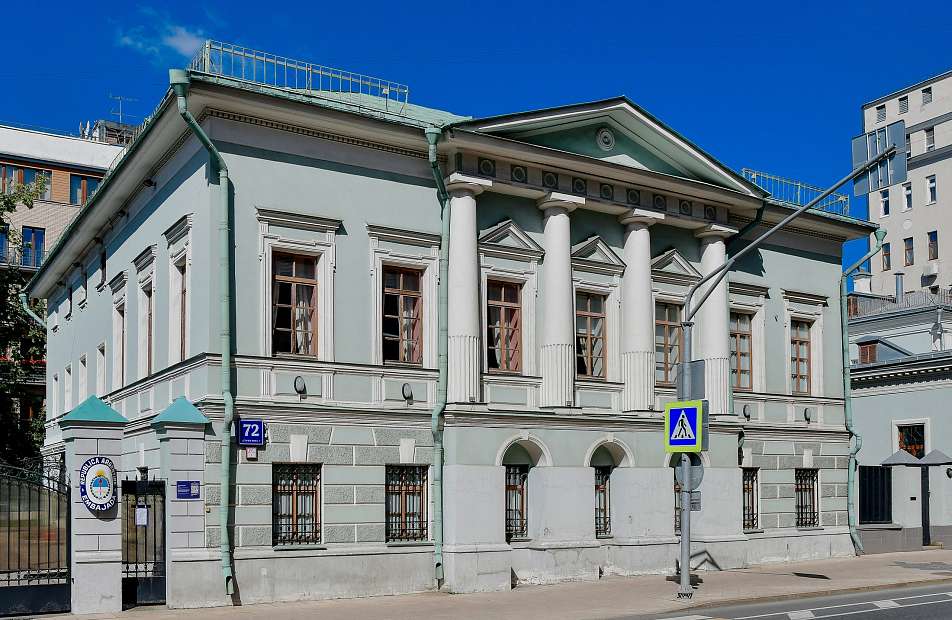
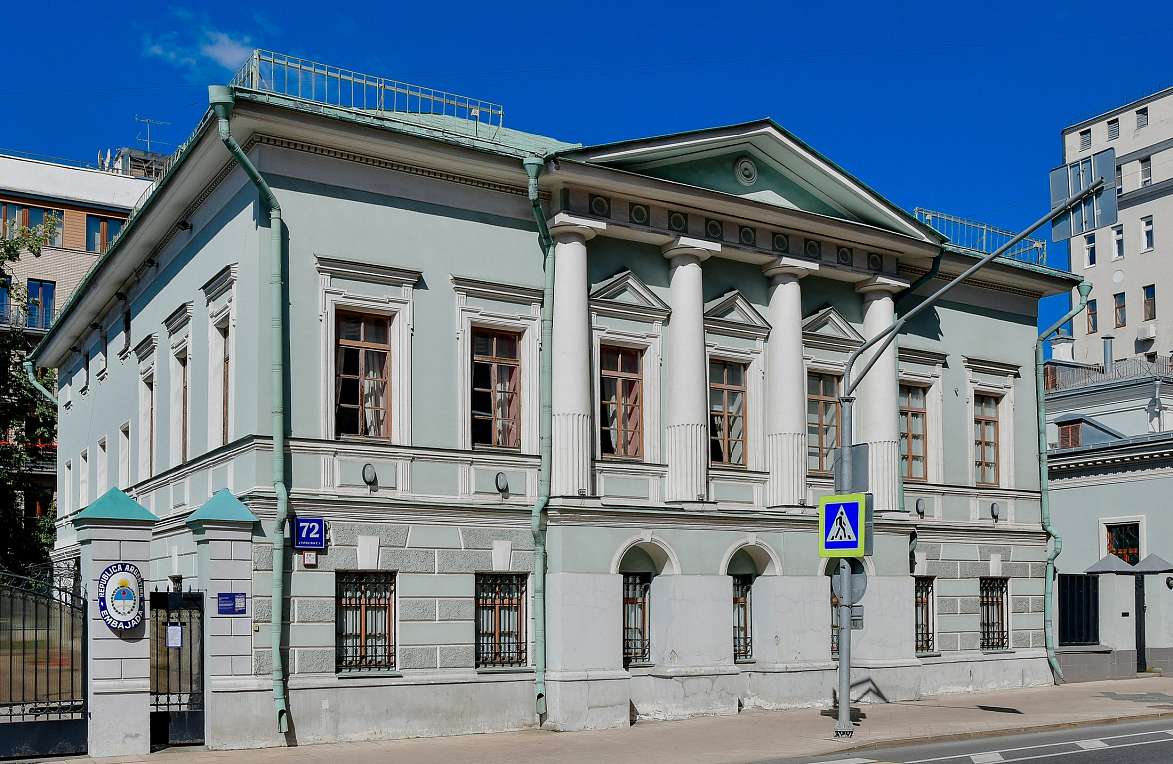
To this day, the street has retained its cozy look of the squat post-fire Moscow, a typical representative of which is a two-story light green mansion (now, number 72). The history of this house dates back to the beginning of the 19th century, when a married couple of metropolitan entrepreneurs Lobanovs acquired a plot there and built a classical manor.
The two-storey stone house with a basement was built in 1823, but its interior decoration was continued for the next 10 years. The main façade of the building was divided by four columns and a mezzanine, and keystones were located above the windows of the first floor. In the western part of the estate there were outbuildings, and the mansion itself fully corresponded to the ‘classic projects’ that were developed by the leading architects of Moscow at that time.
In the second half of the 19th century, the estate passed to the possession of merchants Pugovkin brothers, who made a fortune by selling caps. They laid out a garden behind the house with a gazebo with an iron roof and a summer house with a veranda. The site was surrounded by a stone fence, a part of which has survived to this day.
Until the beginning of the 20th century, the estate has retained its patriarchal appearance. But under the next owner of the mansion – entrepreneur Alexander Kuleshov – the main house was equipped with modern water supply, sewerage and electricity systems. The lower parts of the columns were extended with the help of plaster finishing.
After 1917 and for the next three decades, the mansion housed a children’s tuberculosis sanatorium and a dispensary for disabled children. Since 1966, the building has been under the jurisdiction of the Main Administration for Service to the Diplomatic Corps. Thanks to the efforts of restorers, the house has acquired the features of a classic merchant mansion of the early 19th century, both outside and inside.
Today, the mansion on Bolshaya Ordynka Street is a valuable piece of the historical and urban environment of Moscow and is an example of a merchant estate typical of Zamoskvorechye of the first third of the 19th century.