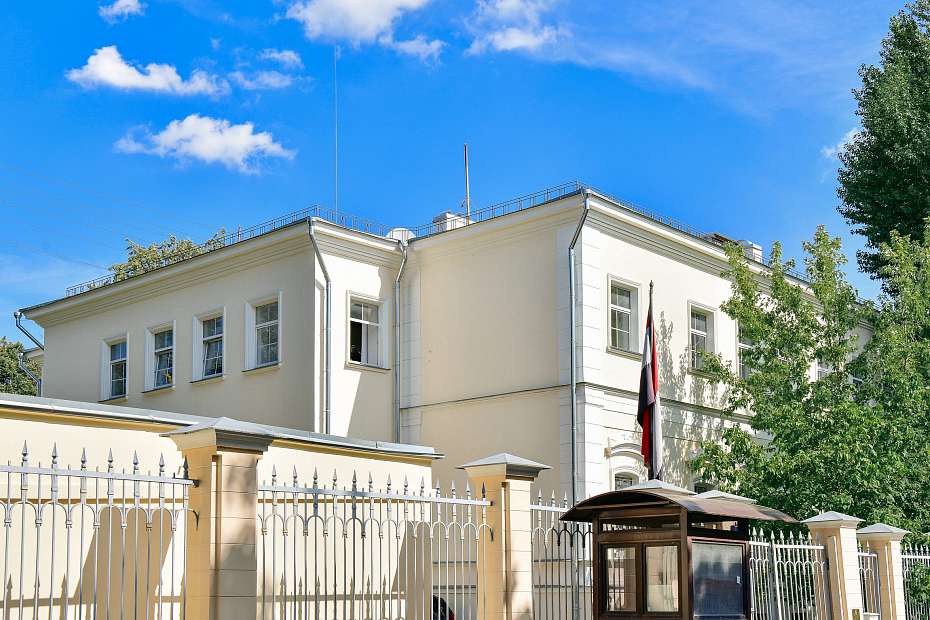
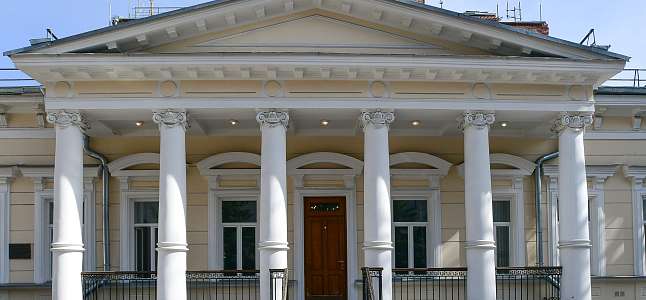
Kropotkinsky Lane, Building 12, Bldg. 1. "The House Where Decembrist Alexander Belyaev Lived After Returning from Exile and Died in 1887."**
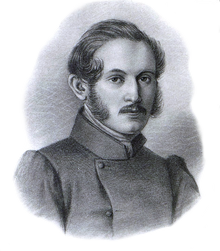
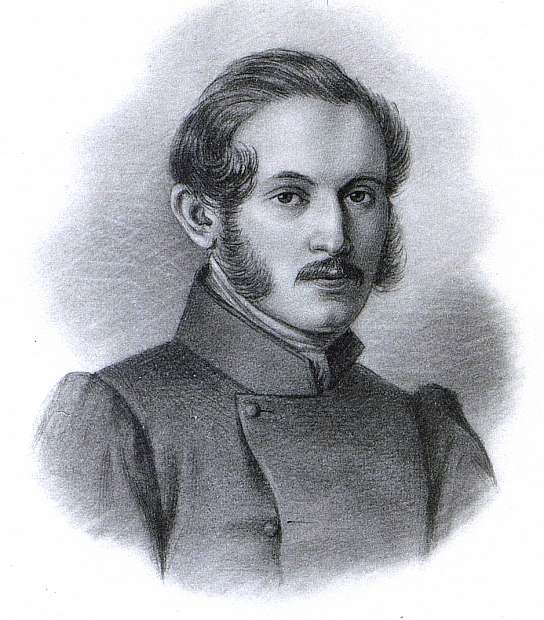
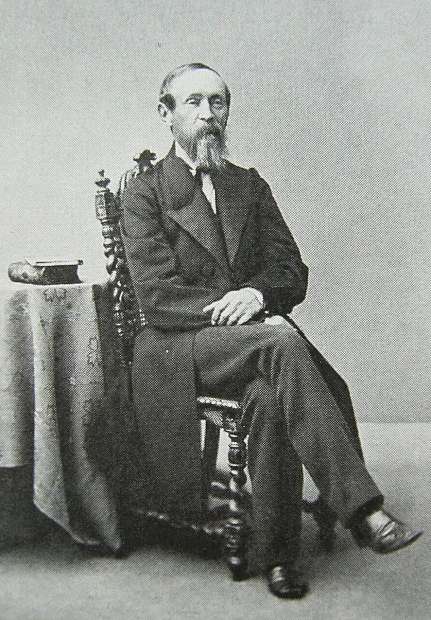
Rather modest compared to its illustrious neighbors (the Kropotkin family home and the Derozhinskaya Mansion), Building 12 Kropotkinsky (formerly Shtatny) Lane gained fame and protected status in the 20th century, primarily thanks to the Decembrist Alexander Belyaev. Alexander Belyaev (1802-1887) was a midshipman in the Guards Crew, a Decembrist, and a participant in the Senate Square Uprising. In 1824, he became one of the founders of the secret "Society of Officers of the Guards Crew." After returning from Siberian exile in 1856, he spent the last years of his life at No. 12, writing his memoirs, "Memories of Experiences and Feelings." Despite his solitary lifestyle, Belyaev attracted the attention of his contemporaries as one of the last living witnesses to the events of 1825. In the early 1870s, Leo Tolstoy visited Belyaev several times, planning to write a novel about the Decembrists, and strongly encouraged him to publish the manuscript.
Before Belyaev, the house had a history quite typical of Moscow mansions and is worthy of mention not only for its connection with the Decembrist. The first mention of the estate dates back to the mid-1720s, when the land was transferred from the Prikaz of the Great Palace and the Moscow Provincial Chancellery to the Chief Secretary of the Governing Senate, D.I. Nevezhin. By 1753, one-story stone chambers had been built in the center of the estate, and a garden occupied the southern part of the courtyard.
In 1800, the estate was acquired by Alexandra Repninskaya, the widow of Yakov Repninsky, a lieutenant general and associate of Suvorov. Repninskaya's daughter, Ekaterina, who inherited the property, soon married Major General Anton Ivanovich Gerard, known for his role as a military engineer in overseeing major Moscow reforms: the repair of the Kitay-gorod wall, the construction of the new Nikolsky (Krymsky) Bridge, the Arsenal building, and the granite cladding of the Kremlin embankment. He was also one of the first entrepreneurs in Russia to establish factory production of beet sugar, replacing expensive imported cane sugar. The famous memoirist of those years, Elizaveta Yankova, who lived in the house across the street, recalls this couple fondly and repeatedly. Since the entire wooden structure on the property had been completely destroyed in the fire of 1812, the new owners rebuilt the courtyard on a stone foundation. A second floor was added to the main house, and a two-story stone outbuilding was erected along what is now Pomerantsev Lane in place of the demolished wooden outbuildings.
After the entrepreneur's death, the main house and outbuilding were rented out for family celebrations and apartments. Most of the tenants were noblewomen undergoing treatments with artificial mineral waters at Dr. I.Kh. Loder's establishment on Ostozhenka. Belyaev also settled here as a tenant.
After the 1917 Revolution, the estate housed the representative office of the Bukharan Socialist Soviet Republic. In the 1950s, the building was transferred to the management of GlavUpDK and has since been used for the needs of the diplomatic corps. The structure has retained its volumetric and spatial composition of the mid-18th to late 19th centuries, including the main walls, vaulted ceilings in the basement and on the first floor, the layout of the interior spaces, and the original artistic design of the facades painted in a traditional light yellow color: rustication at the bottom, cornices, beams, pilasters, window frames, and cornices. Therefore, despite its external simplicity, the mansion is of significant historical and architectural value and is a rare surviving example of architecture from the period of Peter II and Anna Ioannovna.
 Sites GLAVUPDK