Sites GLAVUPDK

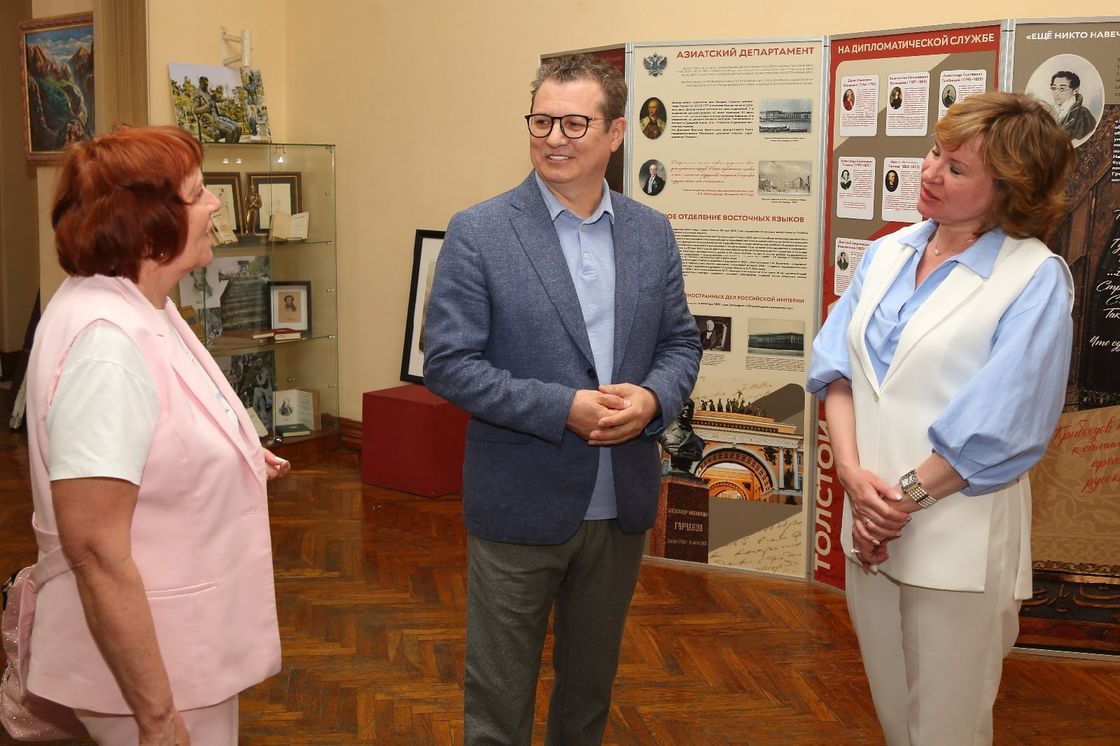
Ahead of the 230th anniversary of Alexander Sergeevich Griboedov's birth, we spoke with Aleksey Chertkov, Associate Professor at the Diplomatic Academy of the Russian Foreign Ministry, Candidate of Historical Sciences, and Chairman of the Council of the A.S. Griboedov Cultural Heritage Foundation, about A.S. Griboedov's legacy and his diplomatic mission in Persia.
Studying A.S. Griboedov's heritage reveals the multifaceted nature of his talent. A thoughtful contemporary reader's gaze directed at his work discovers in Griboedov not only a literary classic and diplomat, but also an economist, orientalist, pianist, and composer who left an indelible mark on the cultural and intellectual life of his contemporaries and subsequent generations.
Aleksey, you and a group of like-minded individuals are united in the effort to popularize A.S. Griboedov's heritage and preserve the few cultural values remaining after his death. You are also known as the author of the monograph "A.S. Griboedov. The Beginning. Persian Mission 1818–1823." What prompted you to study the personality of the great Russian diplomat and playwright?
The story is indeed interesting—Griboedov themes captivated me through my students. For the 220th anniversary of A.S. Griboedov's birth, they conceived an educational smart mob project "Griboedov Lives!": we gathered 220 diverse admirers of the playwright's work—students, scholars, writers—and voiced "Woe from Wit" in roles, posting the video on social networks. Observing the interest with which students approached reading the famous work, I realized that Griboedov's text and the meanings embedded in it resonate with modern youth. Then, to my surprise, I understood that most people are content with fragmentary knowledge about Griboedov the diplomat, understanding little of the true driving motives of his behavior in critical moments of his fate.
Griboedov's personality is an entire Universe—studied, but little understood. The clichés that have become trite in assessing his place in the history of Russian diplomacy, and indeed literature, diverge even among intellectuals regarding the significance for him of developing Eurasian space. People settle for little: Griboedov is the author of one comedy, who due to his unbearable character failed to find common ground with the Persians and was killed in Tehran. This is how people who know little of the reasons for Griboedov's actions, the circumstances of his life path, his thoughts, aspirations, and desires aimed at transforming many aspects of Russian reality of that time reason. I attempted to reflect these circumstances in my book, which you mentioned.
A.S. Pushkin was a thousand times right—and by the way, a close friend of the diplomat—writing in "Journey to Arzrum" these farewell lines about his fellow writer: "People believe only in glory… What a pity that Griboedov did not leave his notes! Writing his biography would be the task of his friends; but remarkable people disappear among us without leaving traces. We are lazy and incurious..." After Griboedov's death, both capitals mourned him briefly and soon forgot. That's why Pushkin invented the episode of encountering the cart carrying the diplomat's coffin—to ensure he would be remembered!
Alexander Sergeevich was an "extraordinary man" (Pushkin's words), meaning the capital's elite acknowledged Griboedov's qualities and openly discussed his talents at their assemblies, confessing love for him with all his positive and negative traits, such as "melancholic character," "embittered mind," "good nature." Meanwhile, all these qualities still created an image of Griboedov as "extraordinarily attractive" even then. And we must not forget: among them were not only devoted writer friends, but also enemies and rivals in the literary creative process and beyond.
What discoveries have you made while studying diaries and other archival documents related to his work and professional activities?
A.S. Griboedov's travel notes, which form the basis of my book, are written in a lapidary style: short sentences with many colons, ambiguities, unfinished phrases. Sometimes it's hard to find connecting textual structures or meanings. The researcher must literally "push through" the thicket of Griboedov's conventions and omissions present in the notes' texts.
We must not forget that Griboedov wrote his diary entries while on diplomatic service, and he surely could not be certain they wouldn't fall into the hands of Qajar or English residents. This explains the encrypted nature of Griboedov's letters written in field conditions. He spent several years in constant travels and wanderings as secretary of a "wandering mission"—as he called himself.
It's even harder for the researcher to "push through" the described circumstances to understand the personal experiences of Griboedov the diplomatic mission secretary, to what was really on his soul during that period of forced "wanderings" between St. Petersburg, Moscow, Tiflis, Tehran. This especially concerns the internal conflict of a young man caught in the most difficult conditions—in the epicenter of confrontation between two mighty powers, Russia and Persia, and the struggle for influence by the British residency around the shah.
The method of intellectual immersion I applied in Griboedov's circumstances allowed several discoveries. They concern Griboedov's plans to create his own state—a peculiar space of talented and intelligent people. The technique of mediational transfer of the author into Griboedov's circumstances revealed patterns in the style of his diary texts' exposition, known as "Griboedov's swings." Here's what it's about: in the diaries, A.S. Griboedov often shares experiences and emotions without details of service or intelligence activities. Even if at the beginning of the text he laments fate or mentions unbearable living conditions, painting his impressions in dark colors, light, positive meanings inevitably follow.
Principles of orientalizing space are inherent in Griboedov's travelogue. It traces the fatal duality of the diplomat's self-identification, the duality of his position as a littérateur and official fulfilling duties as secretary of the Russian mission, and later minister-envoy of the Russian Empire in Persia. Undoubtedly, all this left a mark on the content of Griboedov's diary writing style.
The diplomat in Persia captured scenes of Eastern despotism unacceptable to the enlightened European eye: "a handful of diamonds stuffed into a poet's mouth," "cut ears and knouts before me," "labyrinth of Persian injustices," and much more. Later, this view would be held against Griboedov as an impermissible colonial pattern.
Let's talk about the role and significance of A.S. Griboedov in the history of Russian diplomacy. What were his successes in this field?
This is one of the most complex questions. We, Griboedov enthusiasts, believe in his absolute impeccability and consider him a true hero of the Fatherland who died weapon in hand… Such heroes are needed in our time. But there is also the layman's view of the final episodes of Griboedov's life related to the circumstances of his death. Griboedov is blamed for allegedly showing disdain for Qajar court traditions. For example, he sat in the presence of Feth Ali Shah, wearying him with conversations, "trampled Persian carpets"—did not remove his shoes, as was customary upon entering for an audience with the ruler of the dynasty. Courtiers preferred to deal with the weak-willed head of the Russian mission, Mazarovich, who begged preferences for Russia from the shah in obsequious aspirations, kissing the Persian ruler's hand.
Griboedov was different. With long conversations, he not only "wearied" the shah but pressed his line, achieving better negotiating positions advantageous to Russia. The Qajars chose another tactic: evading direct answers, leaving room for maneuver, holding meaningful pauses. The demands of Griboedov's superiors, primarily Foreign Collegium manager K. Nesselrode, dictated a different line: achieve payment by Persia of the 20 million ruble contribution to Russia under the 1828 Turkmenchay Peace Treaty at any cost. This was impossible: Persia's finances, defeated in battles with the Russian army, were in decline. Essentially, Griboedov was put in a position to win—secure the contribution payment—or die.
As for "trampling Persian carpets"—incidentally, a Griboedov expression—the "guilt" lies with Caucasus proconsul General Aleksey Yermolov, who greatly influenced Griboedov. The young diplomat communicated much with the general and was even considered his favorite. It was he who instilled the idea that Russians had earned such a privilege—not removing shoes in the Qajar ruler's residence. No other diplomatic mission quartered in Tabriz had such a privilege.
Critics of Griboedov's actions should remember: he received a brilliant education, was a candidate of law, excellently mastered several languages including Persian, constantly studied the history and culture of that country. And as one of the authors of the Turkmenchay Peace Treaty, the diplomat surely knew what he could demand as minister-envoy—the legitimate representative of the victorious (Russian) side based on its terms, and what lay outside the treaty's content.
Let's discuss the study of the Persian mission, during which Alexander Sergeevich managed to free over 150 Russians from captivity and even escort them home. What qualities do you think enabled this? What diplomatic methods did he use to achieve his goals?
Under the 1813 Gulistan Peace Treaty formalizing the conditions of the Russian army's victory in the long Russo-Persian war, Russia gained the right to return soldiers captured by the Persians—sarbaz. This was the first example of civilized return of combatants home. With characteristic enthusiasm, Griboedov undertook to assemble a detachment and march on foot with it to Tiflis, where the army headquarters was.
However, despite the signed agreements, the Qajar court obstructed Griboedov's plan in every way: people were kidnapped, bribed, lured away, not provided food or protection, and even stoned. Griboedov was left one-on-one with a problem then crucial for prisoner exchange. It was then, in August 1819, that Griboedov vowed in his diary to help the soldiers: "I will lay down my head for the unfortunate compatriots..."
Only thanks to Alexander Sergeevich's courage and persistence did the first detachment of over 150 Russian captives return home. Even General Yermolov, who also tried to free his soldiers, failed to achieve this.
Yes, the 1813 Gulistan Treaty stipulated rules for the safety of diplomatic missions, later violated by the Persians. And Griboedov, as a lawyer, knew their content perfectly, and as minister-envoy of the Russian Empire in Persia, relied on knowledge of interstate legal relations. Even disregarding the signed agreement on diplomats' safety, in 1829 the Qajar court decided to rid itself of the hated Griboedov.
Thanks to Griboedov's efforts, the Turkmenchay Peace Treaty text included conditions for returning Armenian families from Persian captivity. Armenian historians studied the Armenian resettlement process, under Russian army protection saving hundreds of thousands of Armenian families from destruction. No wonder a monument to Griboedov stands in Armenia's capital. And in Georgia, people call him the "son-in-law of the Georgian people." Such was the man of Eurasian scale!
Was Alexander Sergeevich primarily a diplomat and statesman, or still a littérateur?
Historically, Griboedov is better known in our country as the author of the immortal comedy "Woe from Wit." Little was spread about the diplomatic side of his biography due to the aforementioned circumstances. In identifying his professional affiliation, Griboedov was first and foremost a career diplomat in the state service of the Russian Empire's Foreign Collegium. Unlike other poet-diplomats (including the "archival youths"), he did not earn a living by writing but devoted his best years to serving the Fatherland. Griboedov studies affirm the sympathetic term for him as a "diplomat with a poet's soul."
What can you say about A.S. Griboedov's relationship with A.S. Pushkin? Strong friendship or rivalry?
Indeed, two geniuses of Russian literature created in the same era. They were bound by strong friendship. There was no rivalry between them. Interestingly, fate constantly brought them together, as if giving opportunities to share achievements or compare plans. Judge for yourself: they knew each other from courtyard companies near the Yelokhovo Cathedral, entered service in the Foreign Collegium simultaneously, wrote great works "Eugene Onegin" and "Woe from Wit," discussed compositions in the same salons, planned European travels, and circumstances of their weddings to young brides also have similarities. This was the friendship of young people passionate about creativity, worries for the Fatherland's fates, searching for their place in the difficult circumstances each faced.
You are Chairman of the Council of the A.S. Griboedov Cultural Heritage Foundation—tell us more about its history?
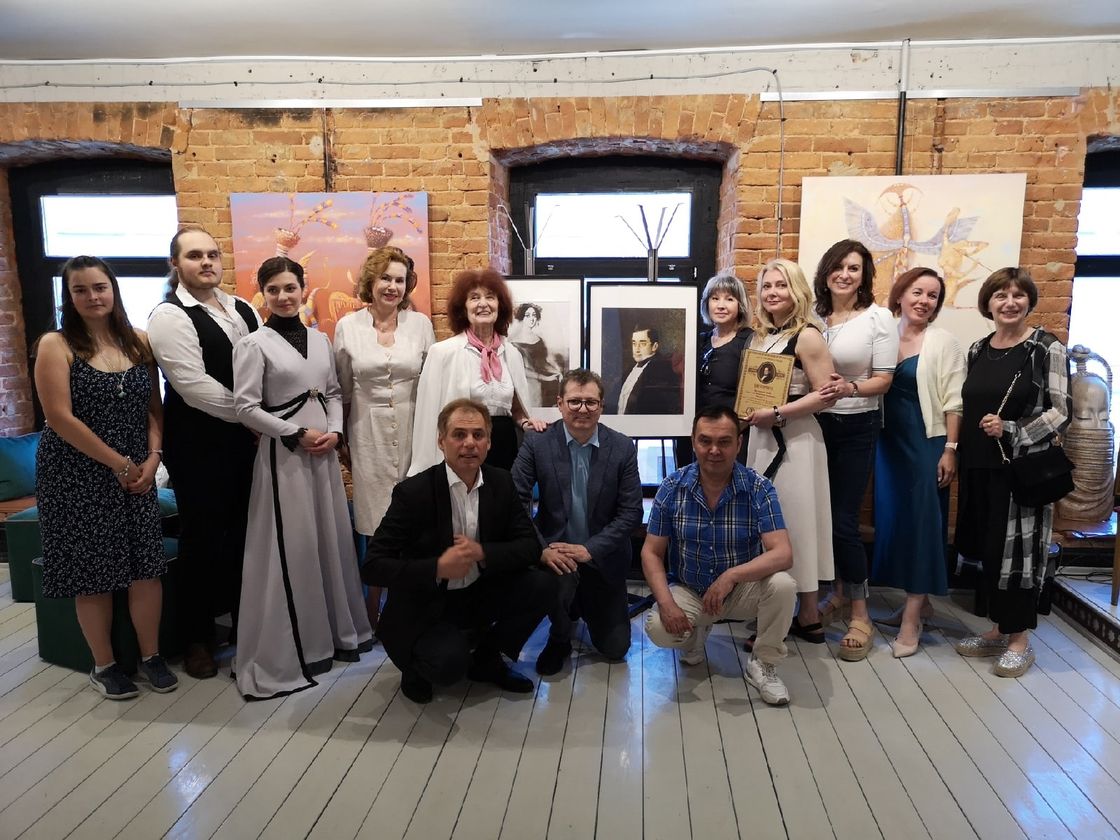
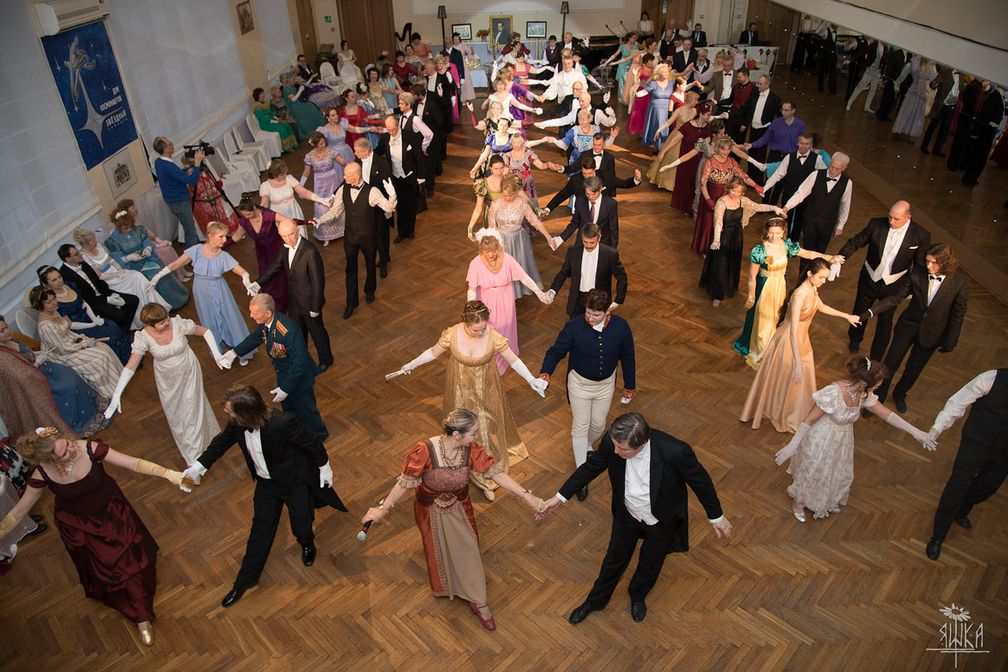
We began with creating the "Art-Griboedov-Club," uniting friends, artists, writers, singers, musicians, designers. Excellent relations formed with Library No. 1 named after A.S. Griboedov and its remarkable staff, who supported the club's ideas. The library became a venue for first events: historical fashion collections shows, Griboedov balls, literary-musical evenings. The foundation was officially registered as a legal entity in 2018, and taking the opportunity, I express gratitude to all admirers of A.S. Griboedov's talent supporting our initiatives.
Over these years, we implemented major projects: exhibitions of documents and materials "Griboedov Lives" and "Your Devoted Griboedov," international scientific-practical conference "A.S. Griboedov's Eurasian Diplomatic Mission," "Literary-Diplomatic Exploratorium 'Alexander Griboedov.'" We developed and tested historical-adventure quests "Griboedov—James Bond of the 21st Century," conduct tours of Griboedov places in the capital, hold Griboedov balls, literary evenings, and contests. For material collection, we organized scientific expeditions to Iran, Georgia, Armenia—sites of the diplomat's service.
In your opinion, is youth sufficiently informed about A.S. Griboedov's significance and contributions to Russian diplomacy and literature?
I'll share an observation. Parents of schoolchildren often approach us requesting tours of Griboedov places. Many are surprised that Moscow—Griboedov's birthplace—has no museum or permanent exhibition of him. We have to walk pupils through the capital's historic streets in heat and cold, studying what little remains from Griboedov times.
In school, students mainly analyze the "Woe from Wit" text. Biography, especially diplomatic service details, is not reached. I see with what interest youth listens to stories, delving into biographical circumstances details. For them, he opens from a new side, and Griboedov has a great many.
Moscow needs a Griboedov museum. Not only because he was born here, wrote his main work, but due to the significance of his feat for the Fatherland, contributions to Russian literature. Griboedov's death is the only case in Russian history when a diplomat, the country's greatest son, died weapon in hand defending the Russian embassy—his state's territory.
In 2025, the 230th anniversary of the great Russian poet and diplomat Alexander Sergeevich Griboedov's birth will be celebrated. Aleksey, please tell us what events are planned?
Recently, a landmark event for our cause occurred—the transfer to the foundation of historical documents from A.S. Griboedov's personal files from the Archive of the Russian Empire's Foreign Policy vaults. We are analyzing these invaluable testimonies of Alexander Sergeevich's diplomatic service, hoping to organize an exhibition. Plans include literary-musical evenings, scientific sessions dedicated to the classic's anniversary, continued research. We will organize restoration of elements of S. Begichev's estate—Griboedov's close friend—in Tula Region's Griboedovo village, where the author worked on his immortal comedy.
The Griboedov theme is inexhaustible. It inspired us to expand project scopes to the broader theme "19th-Century Poet-Diplomats in Service to the Fatherland." Years will pass, generations change, but Griboedov's name will not be forgotten; it is forever inscribed in our Fatherland's history. For us, his admirers, Griboedov did not perish in Tehran but survived and continues fighting for Russia's best minds. In our interactive quest "A.S. Griboedov—James Bond of the 19th Century," participants solving logic tasks free the Russian envoy surrounded by enraged fanatics and lead him from the destroyed embassy. Even in our intellectual game, we do not allow thoughts of bloody reprisal over our hero.